
Inaugural Letter
The information in this email is private and confidential and not intended to be shared beyond those intended recipients.
As we take the first steps on what we hope will be a long and fruitful venture together, we want to thank you for showing interest in the Caledon Energy Transition Fund (Caledon). In our inaugural letter, we want to share some background on the fund's name, our investment philosophy, and our goals for the investment practice we are building.
Caledon is the name of a river in Southern Africa next to a farm Brian visits every year. The Caledon team shares a fascination with and respect for rivers.
Rivers and the practice of investing or stock picking share a dynamic and ever-evolving nature, much like the meandering course of a river that changes and flows, sometimes in ways not immediately apparent. Just as a river's path can vary significantly when viewed from afar compared to up close, successful investing involves both a macro and micro perspective: understanding broader market trends (zooming out) and paying attention to the intricate details of individual companies (zooming in). Navigating the currents of the financial markets, much like traversing a river, requires adaptability, a keen eye for underlying patterns, and the ability to anticipate changes, whether gradual shifts or sudden, turbulent turns.

Why invest in the Energy Transition?
The Caledon Energy Transition Fund seeks long-term capital appreciation by investing in attractively valued companies pivotal to the world's transition to low-carbon energy use.
The Energy Transition presents one of the decade's most promising investment themes, with several clean energy technologies reaching an inflection point where they are technically ready, commercially viable and enjoying widespread adoption. In recent years, capital commitments to clean energy technology have significantly exceeded governments' commitments, pointing to a shift in how investors perceive the sector.
The Energy Transition sector has witnessed a contrasting landscape of stock performance in 2023, with many companies bearing the brunt of macro headwinds (such as rising interest rates) and fundamental questions about their ability to achieve sustainable growth and profitability, while others have managed to weather these storms, continuing to deliver impressive growth and returns.
While the recent performance divergence may seem concerning, we find it somewhat reassuring. Our approach to investing in the sector is based on a deep understanding of the industry's structure and competitive dynamics at every stage of the value chain for each clean energy technology. This in-depth understanding allows us to identify bottlenecks in supply chains, where companies hold dominant market positions, benefit from formidable barriers to entry, and generate attractive financial returns.
Equally important, our approach allows us to steer clear of business models that are easily replicated, have shaky financial underpinnings, or pose significant execution challenges. Despite the influx of capital into the sector and the continuous advancements in clean energy technology, our analysis suggests that these factors alone do not guarantee positive returns for shareholders. The gains from rising productivity may not always reach shareholders, especially in commoditised segments of the clean technology sector.
This situation mirrors the dilemma faced by Berkshire Hathaway when it exited the textile industry in 1985. Overwhelmed by a saturated global market and foreign competitors with inherent cost advantages, Berkshire Hathaway had a difficult choice: make substantial capital investments to maintain its textile operations at the expense of subpar returns or risk losing competitiveness by withholding investment. Ultimately, Berkshire closed its textile operation, concluding that the promised benefits from additional textile investments were illusory.
Warren Buffett eventually realised that many textile companies invested in new technology, hoping to reduce costs and gain a competitive advantage. However, these investments did not yield the desired benefit because almost all competitors made similar investments, neutralising each other and leading to reduced costs becoming the new baseline for prices. This resulted in a situation where all the companies had spent more money, but their return on capital declined. In his 1985 letter to shareholders, Buffett compares this situation to people watching a parade, where each person decides to stand on tiptoes to see better, but this does not improve the view for anyone, and they all get sore feet!
The 1980s US textile industry, described by Buffett, serves as a cautionary tale for investing in commoditised segments of the energy transition. Driven by a combination of government incentives and a surge in private investment, various segments of the clean energy sector are likely to experience excessive competition and excess capacity, leading to anaemic returns on capital. Thus, low returns on invested capital will likely be a feature and not a bug for several segments of the clean energy space.
For example, with its low barriers to entry and fragmented landscape, the solar fabrication sector has significantly higher capex requirements and materially lower returns than the more consolidated solar equipment sector. The benefits of improving technology and declining prices in the solar fabrication sector – particularly solar panel manufacturing – have primarily accrued to the sector's customers rather than its shareholders. With each company in the sector continuously investing in new equipment to stay competitive, it is unlikely there will be a structural improvement in the fundamental economics for most participants.
In contrast, equipment manufacturing in the solar industry is more specialised and thus more consolidated, and some equipment manufacturers enjoy high entry barriers due to the industry's structure, including long lead times for qualification as suppliers. Faced with fragmented downstream customers who constantly expand and upgrade their equipment to stay competitive, equipment manufacturers generally have better fundamentals than their downstream customers.
Our analysis of various industry verticals within the energy transition space yields several key conclusions:
We favour a highly selective investment strategy over thematic investing.
Active management strategies, driven by deep sector knowledge and hands-on industry experience, provide substantial advantages over passive investment options.
Different countries are at various stages of the energy transition. Using pattern-matching techniques in a global context enables us to make informed judgments about the pace of industry change and identify the precise beneficiaries.
Our investment strategy and philosophy
Our investment approach seeks to identify and invest in stocks priced significantly below our assessment of their intrinsic value. Intrinsic value allows for a company's long-term growth prospects, competitive position, management quality, and re-investment runway.
We take a holistic approach to valuation, considering both qualitative and quantitative factors. We zoom in on company fundamentals, such as business model, financial performance, management incentives and track record. We then zoom out to consider industry trends and the competitive landscape. We zoom out again to consider macroeconomic factors, such as central bank policies, regulation and geopolitical risks shaping the global economy and individual industries.
Ultimately, we believe the best businesses have:
A strong and improving competitive position.
Capable and honest management, and
Long re-investment runway.
While the potential for investment in the energy transition is widely acknowledged, accurately identifying the specific companies that will benefit and the speed at which the market will evolve is paramount to achieving exceptional returns. Our in-depth understanding of renewable energy supply chains in China – their development, challenges, and beneficiaries – positions us uniquely to recognise the most promising investment opportunities as governments worldwide adopt China's renewable energy strategies.
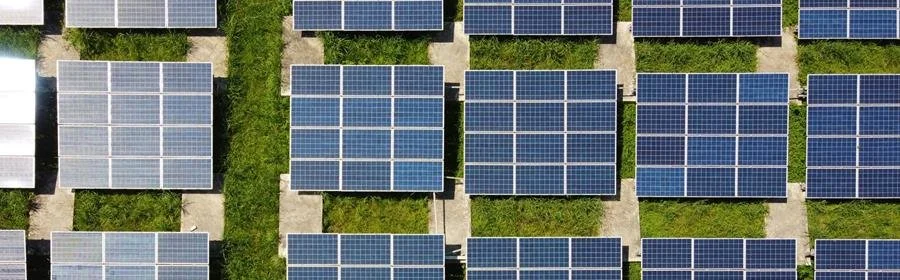
Zhejiang Jingsheng: A Key Player in the Solar PV Supply Chain
Zhejiang Jingsheng Mechanical (SHE:300316, 'JSG'), founded in 2006, is a leader in the crystal-growing equipment industry and has a rapidly growing materials business. JSG was founded by Qiu Minxiu, a doctoral supervisor at Zhejiang University, who was later joined by Cao Jianwei, a graduate of Zhejiang University with a PhD in Mechanical and Electronic Engineering. JSG excels in turning R&D efforts into tangible outcomes, such as securing client orders, achieving mass production and increasing revenues.
From Equipment Leader to Materials Platform
Outside of Longi, JSG has a 90%+ share of the furnace market, making it a dominant player in a business that features high barriers to entry, close collaboration with downstream clients and extensive opportunities to leverage existing client relationships to expand the scope of its business. Having started and grown as a leading supplier of solar crystal growing furnaces, JSG has evolved into a platform with a fast-growing materials business and an expanding equipment business. The materials business consists primarily of its quartz crucible, diamond wire, silicon carbide, and sapphire businesses, which we project will contribute 30% of the company's revenues in 2023E. The growth of the materials business has been so rapid that we believe analysts have yet to reflect its contribution in their forecasts fully.
Diversified earnings, robust order book
We expect JSG to maintain resilient earnings due to multiple factors. In the short term, the company enjoys the security of a robust order book, amounting to Rmb28.8 billion as of Q3 2023. Looking ahead, we expect significant revenue expansion in the medium term, driven by its dominant position in an industry where downstream clients who embrace the latest equipment enjoy notable cost and technology advantages over their peers. This dynamic ensures a consistent demand for cutting-edge equipment, creating a favourable market for JSG's offerings. In the recent past, JSG has expanded its business scope to include semi-equipment, which should lead to faster growth amid accelerated localisation in the semiconductor space.
Undemanding valuation
For the five years to FY2022, JSG grew its revenues by 40% CAGR and its earnings by 50% CAGR, with net margins rising from 19.8% in FY2017 to 27.5% in FY2022. Over the same period, JSG's ROE increased from 10.4% in FY2017 to 33.6% in FY2022. We expect JSG to deliver strong revenue growth (we forecast 48% revenue CAGR between FY2022 – 25E) and resilient earnings margins. On our estimates, JSG trades on 12.0x/9.7x FY2023/24E EPS.
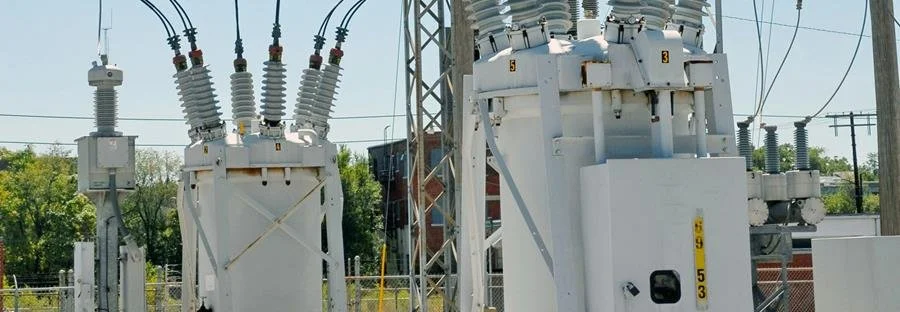
Hammond Power Solutions: Capitalising on the Electrification of Everything
Innovative companies like Zhejiang Jingsheng have enabled the Chinese solar supply chain to accelerate production growth, increase quality and reduce production costs to meet surging demand for solar energy globally; however, absorbing this ever-increasing production will be an ongoing challenge in end markets. In the United States, for instance, the passage of the Inflation Reduction Act has created ample financial incentives for new clean energy installations. However, labour and grid interconnections remain bottlenecks to bringing new projects online.
Grid Equipment: A Fertile Ground for Investment Opportunities
We see the grid equipment space as a prime hunting ground for winning stocks in the energy transition. Regardless of energy generation mix, a higher proportion of intermittent renewable generation and increased energy demand due to the "electrification of everything" will require modernisation and expansion of ageing electricity grids worldwide. Grid equipment suppliers that were active in consolidating their leadership over the past two decades in what appeared to be slow-growing, mature markets are now in a prime position to ride the tailwinds of one of the most attractive growth themes over the next two decades.
Hammond Power Solutions: A North American Leader in Dry-Type Transformers
We think that Hammond Power Solutions is one such grid equipment manufacturer with a long and profitable runway ahead of it. Founded in Guelph, Canada, more than 100 years ago and still family-owned and operated, Hammond has maintained the discipline and focus to become the undisputed leader in dry-type transformers in the North American market. Transformers are required at energy generation and consumption points to alter voltage levels and enable efficient power transmission over long distances. Dry-type transformers have several key advantages over oil-filled transformers. Most importantly, they have a lower environmental footprint and fire risk, making it the preferred technology for renewable generation projects and indoor environments such as data centers, hospitals, and factories. Spanning 21 manufacturing locations and serving over 3,000 distributors, Hammond is the largest player in the North American transformer market by a wide margin, with 25% overall share compared to only 15% for the next four players combined. Hammond's market share dominance is even more notable in dry-type transformers at 70%, enabled by their OEM brand's strength and ability to quickly fill custom orders, which make up 52% of sales.
Strategic Acquisitions and Diversification Efforts
While price increases following COVID have had a significant impact on revenue growth and gross margin expansion, Hammond's organic volume growth has registered over 10% annually for the past several years amidst an ongoing expansion in their distribution network and production capacity, with a focus on select segments of the transformer market where they lack the capacity to meet growing demand fully. Outside their measured organic growth strategy, the company has also started to pursue bolt-on acquisitions in the adjacent power quality market, which may further increase gross margins over time.
Valuation remains attractive
In FY2024, we expect Hammond to generate about $70m of net income on $770m of revenue, growing 10% annually. At 14x FY24 earnings, Hammond still trades at a significant discount to its grid equipment peers at 20x FY24 earnings, despite the relative outperformance of its underlying business. Over a longer time horizon, management is laying the foundation for continued growth and guiding revenue to exceed $1B well before the end of the decade.
Thank you for your support. Pease feel free reach out to us if you have any questions, we value your thoughts and engagement.