
Q1 2024
Strong Q1 Performance - Focus on Long-Term.
Launched on January 9, 2024, the Caledon Energy Transition Fund delivered a net unaudited return of 12.8% in USD for Q1 2024. While the fund's early performance is encouraging, our shared long-term perspective and the inherent volatility of our strategy make monthly, quarterly, or even yearly fluctuations in portfolio value less relevant. Our primary KPI is three-year CAGR, so we suggest skipping the performance discussion in future investor letters until Q2 2027.
Portfolio Updates
Our largest three holdings at quarter-end were Nvidia (NVDA US), Hammond Power Solutions (HPS/A CN), and Comfort Systems (FIX US). These are also the highest contributors to our return this quarter. The largest detractors were Sprott Physical Uranium Trust (U-U CN), Itron (ITRI US) and Wesco International (WCC US).
The AI Revolution Fuels Data Center Growth
The rapid advancement of artificial intelligence (AI) is fueling unprecedented investments in data center infrastructure. These investments reflect an exceptionally bullish outlook on demand for AI applications, which are poised to unlock significant productivity increases across broad swaths of the economy. Companies involved in this infrastructure boom stand to benefit significantly. This quarter, we will explore one of our investments in the data center sector: Vertiv, which has significant exposure to these secular growth themes.
The Data Center Capex Outlook
Data centers have historically been big consumers of electrical power, driven primarily by the power consumption of Central Processing Units (CPUs). These silicon-based microprocessors contain billions of transistors that switch on and off billions of times per second to process data, consuming a small amount of electricity each time and generating heat. As the heat builds up, chip performance is negatively affected, leading to potential failure. This makes thermal management crucial to maintaining optimal performance and preventing overheating.
The Heat Problem: GPUs vs. CPUs
As hyperscalers and other operators build capacity to cater to AI deployments, infrastructure requirements in data centers are changing, with Graphics Processing Units (GPUs) replacing CPUs to drive AI workloads. GPU-intensive AI workloads consume vastly more power compared to typical CPU workloads. For example, a high-end GPU can consume 500-700 watts (and rising), while a high-end CPU might be around 150-200 watts.
AI workloads generate considerably more heat due to their higher power density, which impacts data centers in several ways:
Denser rack configurations: Packing more computing power in the same space creates significant cooling challenges.
Advanced cooling systems: Traditional cooling methods might not suffice, necessitating liquid cooling or other advanced solutions.
Higher energy costs: The increased power consumption directly leads to greater operational expenses.
Power input system upgrades: Existing power infrastructure may need upgrades to handle the increased power demands of AI workloads.
Market Underestimates the Scale of Disruption
Companies increasingly perceive the rise of AI as a strategic imperative, not just a technological advancement. The existential threat posed by nimble competitors and startups is fuelling aggressive investment in AI adoption to solidify market share. Driven by the rise in AI adoption, we see the ongoing shift in data center infrastructure as a significant, expanding and durable structural transformation.
Growth estimates for data center capacity vary considerably, with aggregate capacity expected to grow 10% - 20% CAGR through 2028. Including the cost of core computing hardware and assuming 10% CAGR capacity growth, Omdia[1] estimates data center capex to reach $468.4bn by 2027, up from an estimate of $300bn in 2023. This highlights the significant amounts involved and the scale of the revenue opportunities for companies exposed to this trend, even at the lower end of growth estimates.
We see significant upside potential for data center stocks that align with our energy transition criteria:
The surging demand for data centers adds to existing tailwinds propelling companies within the electrification theme. Consider distribution transformers, which are already experiencing high demand in the US due to factors like reshoring, grid modernisation, and the expansion of EV charging infrastructure. Within data centers, medium-voltage (MV) transformers play a crucial role, stepping down the incoming high-voltage grid current to a lower voltage suitable for data center equipment. This creates an additive demand driverfor the transformer market, further amplifying its upside potential in a market with severely constrained supply. Furthermore, diversifying demand across multiple sectors (reshoring, EVs, data centers, grid) helps mitigate potential downside risks associated with any single market segment and makes for a more resilient revenue and earnings profile.
We anticipate revenues in this space to exceed current market projections. Continued advances in AI hardware and applications – driving widescale adoption – should offset expectations of moderating revenue growth, while factoring in operating leverage amplifies the earnings upside potential. Medium-term forecasts for data center capex growth may prove conservative. History suggests investors tend to underestimate the ultimate scale of transformative technology shifts – PC, mobile, cloud, and internet revolutions all surpassed initial projections. Amara's Law underscores this pattern: disruptive technologies often face overstated near-term expectations, followed by a significant underestimation of their long-term impact.
The high level of urgency for data centers to secure power should provide a sustained tailwind for deregulated nuclear utilities, particularly following the Talen-Amazon Web Services transaction in March 2024.
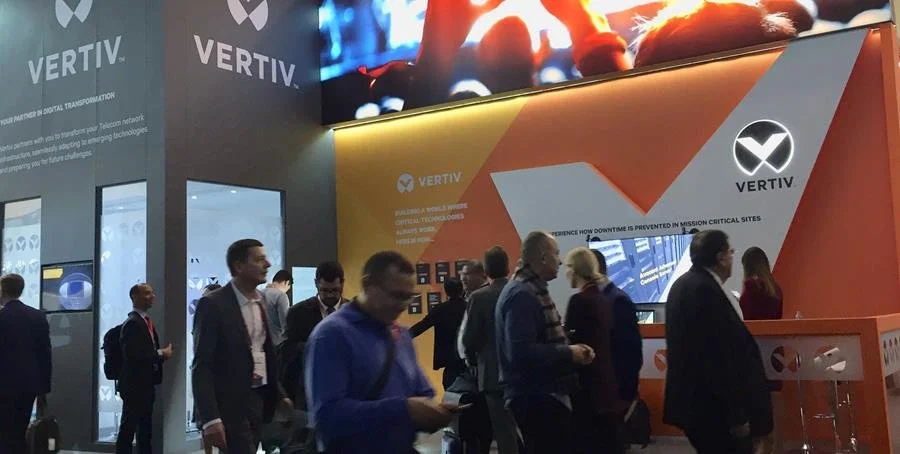
Vertiv: an energy transition bottleneck in the data center space
Vertiv, a holding within our portfolio, exemplifies our strategy of targeting bottlenecks within the energy transition. Their market leadership in data center power and thermal management solutions positions them to capture significant value as digital infrastructure rapidly expands.
Dominant in Thermal Management: Vertiv boasts 32% market share in the DC thermal management segment, significantly outpacing its nearest competitors. This leadership translates into a strong competitive advantage and a resilient revenue stream.
Powerhouse in Power Management: Vertiv further solidifies its position as a data center leader with a leading 16% market share in power management solutions. This comprehensive offering positions them as a one-stop shop for data center clients seeking efficient and reliable infrastructure.
Several factors differentiate Vertiv compared to peers:
Superior Service Capability
Vertiv's extensive global network of 3,000-4,000 technicians enables unparalleled responsiveness, including rapid on-site support, a critical factor in the data center industry where uptime is paramount. Competitors dependent on outsourced services or long-distance travel cannot match this.
Entrenched Hyperscaler Relationships
Established relationships and a proven track record position Vertiv as a trusted partner for the hyperscalers driving industry growth. Vertiv’s products have cleared rigorous certification and evaluation processes, creating a significant barrier to entry for newer players.
Economies of Scale
As the industry's largest pure-play data center infrastructure provider, Vertiv enjoys pricing flexibility and strong margins given higher volume on fixed costs.
Comprehensive Solutions
Vertiv's complete product portfolio simplifies procurement and maintenance for data center operators. This one-stop-shop model offers streamlined planning and integrated power and thermal management solutions, essential for high-density applications.
Global Reliability
Vertiv's global presence inspires confidence in mission-critical environments where uptime is paramount. Their proven scale, track record, and rapid service capabilities eclipse those of emerging competitors and provide significant reassurance for data center operators hesitant to adopt untested solutions from newer entrants.
There are several ways to gauge the reasonableness of data center capex estimates. One approach is to rely on Nvidia revenue guidance, which is strongly correlated to near-term data center capex, acknowledging bottlenecks in chip production and related supply chains. Another approach involves assessing hyperscaler capex, most of which is driven by AI investments. For its most recent quarter (Q4 FY2024), Nvidia reported revenues of $22.1bn, 9% ahead of consensus estimates. Importantly, management guided to Q1 2025 revenues of $24.0bn, representing 9% sequential growth and 233% y/y growth.
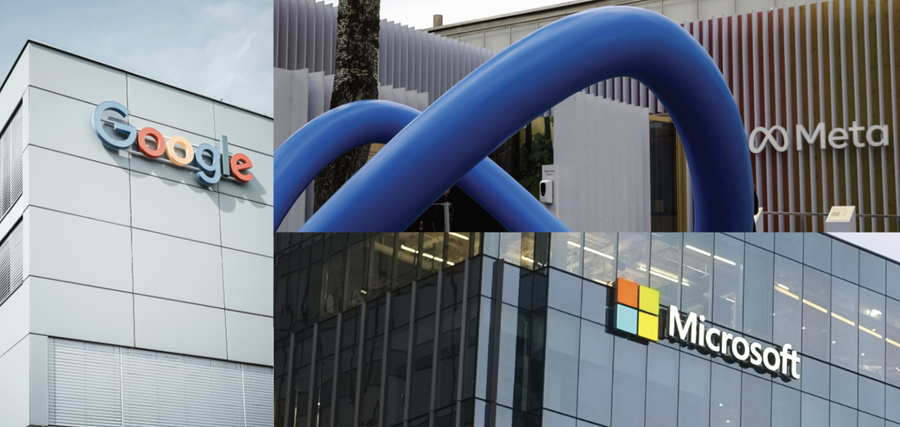
The large hyperscaler companies also reported results guiding to increases in capex in 2024 driven by AI investments, with consensus forecasting 22% growth. This reflects AI's far-reaching and transformative applications that will benefit a broad spectrum of users.
Alphabet's Q4 2023 capex surged to $11.0 billion, a 45% year-over-year increase driven primarily by technical infrastructure investments. Server upgrades represented the largest spending component, followed by data center expansions. Management forecasts FY2024 capex to be notably higher than FY2023.
META reported Q4 2023 capex of $7.9bn, up from $6.8bn in Q3 2023, primarily driven by investments in servers, data centers, and network infrastructure. The company guided to $30-37bn in spending for 2024 (up from ~$28B in FY2023), with growth fueled by AI and non-AI server upgrades alongside the ramp-up of new data center infrastructure. META anticipates long-term infrastructure investment requirements will continue to increase, reflecting its ongoing focus on AI research and product development.
Microsoft's Q2 2025 capex reached $11.5B, up from $11.2B in the preceding quarter. Data center investments primarily fueled this increase to support growing cloud demand, including scaling of AI infrastructure. The company anticipates a substantial sequential increase in capex driven by continued cloud and AI investments.
Favorable long-term forecasts for data center capital expenditures present a compelling opportunity for Vertiv, given their established position within the sector. Vertiv's solutions address a significant portion (20%) of the total data center infrastructure value chain. Considering this reach, coupled with management's long-term outlook, there's a possibility they may be inherently conservative in their projections of 7 – 10% revenue CAGR over 2023 – 28. This potential underestimation translates into upside potential for investors.
Vertiv boasts robust cash generation, with management targeting long-term free cash flow conversion of 95-100%. This affords significant flexibility for both growth investments and shareholder returns. The board has authorised a $3bn share repurchase program (FY23-FY28E) alongside planned debt reduction of $500m - $1b, targeting Net Debt/TTM EBITDA of 1.0x-2.0x. Even with these initiatives, Vertiv retains over $3bn in capacity for potential bolt-on acquisitions should compelling opportunities arise.
Assuming continued secular tailwinds, consistent execution, normalising component costs and strong incremental margins (30 – 35%), we see a credible pathway to ~$6.5 in EPS over the next few years. Companies demonstrating consistent high single-digit revenue growth, double-digit EPS growth, and expanding market share often trade within a ~25-30x PE range or ~18-23x EBITDA multiple.
Should VRT successfully achieve its investor day targets, investor confidence in the company's quality could increase, potentially justifying a premium valuation akin to an industrial compounder, such as Roper Technologies (29.9x NTM EPS[2]), Eaton Corporation (32.2x NTM EPS2) or Fastenal Company (35.4x NTM EPS2). Vertiv closed Q1 at $81.67 which is about 12.5x our base case 2027 EPS forecast—a potential double if a 25x PE holds.
[1] Omdia Cloud and Data Center Market Snapshot – November 2023
[2] Capital IQ consensus forecasts, 5 April 2024
Thank you for your support. Pease feel free reach out to us if you have any questions, we value your thoughts and engagement.