
Q1 2025
We want to begin with something important: while we are long-term investors in the energy transition, we are not immune to volatility — and March was a tough reminder.
Our fund was down 15.0% in March and 20.4% year-to-date through March 31, compared to the S&P 500’s -5.6% in March and -4.2% year-to-date.
We are not happy with this performance – and we want to be direct about that. That said, fluctuations — sometimes significant — are an expected part of investing in structural transitions. We invest in real assets, real industries, and real businesses undergoing long-term change. These don’t move in straight lines, and this inherent variability is currently amplified by elevated geopolitical tensions.
Our strategy is centred on a broad definition of the energy transition: not just renewables or EVs, but the entire system of energy supply and demand, the construction of enabling infrastructure, and the re-industrialisation of the West. While new technologies seem to reshape the world at an accelerating pace, they remain firmly grounded in the physical: energy, electricity, infrastructure, and materials.
The biggest event affecting our performance this quarter was Deepseek — or more specifically, how the market reacted to it. We want to be clear: we don’t dismiss Deepseek or the open-source AI movement. In fact, we think the rise of open source is one of the most important developments of the past year.
Open source dramatically lowers the cost of development by unlocking global talent and reducing barriers to entry. That can be very good for adoption — lower prices, faster innovation. But it may also make it harder for large players to defend moats based solely on proprietary tech. That dynamic can affect how the market values companies across the AI and infrastructure value chains.
Still, our broader view remains unchanged. We are firmly in the Jevons Paradox camp — the idea that as technology increases the efficiency with which a resource is used, the total consumption of that resource often goes up, not down. A classic example: as steam engines became more efficient in the 19th century, coal consumption didn’t fall — it soared because it became economical to apply steam power to far more tasks.
As AI and digital tools proliferate, we believe demand for energy, electricity, and infrastructure will grow — not shrink. That puts even more pressure on the physical systems — the hardware, the power grids, the raw materials, and the people who build and maintain them.
Our portfolio is built around those fundamentals. The transition is volatile. But we believe we’re positioned on the right side of that inevitability.
What We’re Focused On
While short-term movements can obscure the signal, our long-term thesis remains clear. The global energy transition is not about a single technology or a clean headline — it’s about rebuilding the physical and digital infrastructure of the modern world.
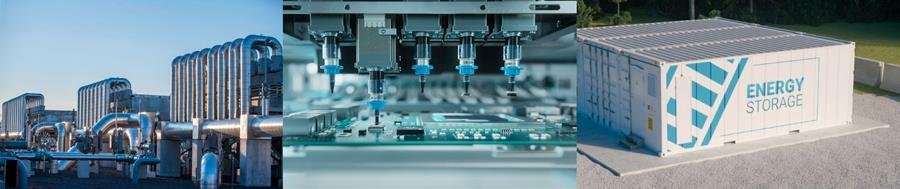
Here are a few of the technologies and sectors we continue to prioritise:
Nuclear – The only scalable, clean baseload energy source. As policy frameworks shift and public sentiment begins to thaw, we believe nuclear will be an essential pillar of long-term grid stability — especially in a world of electrified demand.
Natural Gas – Often overlooked, gas remains the most practical bridge fuel. It’s abundant, flexible, and critical to heating and industrial activity, particularly as coal is phased out globally.
Batteries and Storage – As intermittent sources like wind and solar scale, storage becomes the linchpin. We’re watching closely for cost declines, chemistry breakthroughs, and integration with grid services.
Semiconductors – Every transition today is also a digital one. From AI inference to power electronics, semis are the backbone of modern computing and electrification — and increasingly a matter of national security.
AI Infrastructure – As models get more powerful, so does the physical infrastructure required to train and deploy them. Data centres, electrical hardware, cooling, and advanced manufacturing are all part of this story.
While these technologies vary widely in form and maturity, they share a common trait: they rely on physical scale, complex supply chains, and enabling infrastructure. These are not “just code” businesses — they’re deep technology, rooted in real-world constraints and opportunities.
Thank you for your continued trust.