
Q3 2024
The Caledon Energy Transition Fund returned a net unaudited return of 11.6% in USD net of fees in Q3 2024 and 26.1% year-to-date. Over the same periods, the S&P 500 Index returned 5.5% and 20.8%, respectively.
Our investment philosophy is rooted in the long-term. We believe sustainable growth takes time and encourage our investors to share this perspective. Our strategy, like any investment, is subject to inherent market volatility. Short-term fluctuations in portfolio value, whether monthly, quarterly, or even yearly, are less relevant in the context of our long-term goals.
The North Sea: the gift that keeps giving
In this quarterly update, we will share our thesis on NKT, a Danish company with a history spanning over 130 years. NKT ended Q3 as a 4.7% position for our partners, and in this edition, we explore the promising outlook for offshore wind in Europe and how NKT is poised to capitalise on this multi-decade growth opportunity.
Market Overview
Driven by the EU's goal of climate neutrality by 2050, abundant wind resources, and a sizeable wind energy industry, offshore wind is rapidly becoming a cornerstone of Europe's energy transition. This shift promises a cleaner environment and brings significant economic benefits, including job creation and investment opportunities. In addition, offshore wind strengthens Europe's energy independence by reducing reliance on fossil fuel imports, particularly in light of geopolitical events like the war in Ukraine. While challenges remain, the future of offshore wind in Europe appears bright, presenting exciting opportunities for investors.
Offshore wind's natural synergy with solar power is a key advantage. Stronger winds in the late afternoon and early evening offset dips in solar generation, aligning perfectly with peak evening demand when electricity consumption surges.
The North Sea exemplifies this advantage, driving Europe's offshore wind revolution with its ideal conditions: strong winds, shallow waters, existing grid connections, and a skilled workforce. Supportive government policies and cross-border collaboration further solidify its position as a leading hub for offshore wind investment.
Despite this promising outlook, offshore wind development in Europe faces headwinds. Grid upgrades, permitting delays, and supply chain bottlenecks remain key hurdles. Furthermore, inflation, rising interest rates, and supply chain disruptions have hampered projects, leading to cancellations, delays, and margin pressure for developers, potentially destabilising the supply chain. Adding to these challenges, looming Chinese competition threatens to erode market share and profitability for European players.
To overcome these hurdles, the EU is adopting a multi-pronged approach to accelerate offshore wind farm development. These measures encompass ambitious targets, streamlined regulations, and financial incentives. Recognising the critical role of offshore wind in achieving its renewable energy goals and bolstering energy security, the EU has significantly increased its offshore wind targets. The target for 2030 has been raised to 111 GW, up from the initial 60 GW, while the 2050 target has been increased to approximately 317 GW, from the initial 300 GW. These ambitious targets signal the EU's commitment to offshore wind, encouraging investment and driving the industry's expansion.
In addition, the EU has taken a strong stance on protecting its wind industry from unfair foreign competition, particularly from China, concerned that China could replicate its dominance in the solar panel market within the wind industry. To this end, the EU is considering various measures to protect its domestic wind industry, including potential anti-dumping duties and countervailing measures to offset the impact of unfair subsidies.
Apart from a supportive policy environment, several factors are converging to create a more profitable outlook for the offshore wind industry. Consolidation across the supply chain is increasing, leading to greater efficiency and pricing power. Recent financial pressures are driving better capital discipline and a renewed focus on profitability. Companies are streamlining R&D and prioritising scaling existing technologies, which should translate to improved returns. This disciplined approach coincides with robust demand, constrained supply, and consolidating markets – a combination that suggests a more profitable future for the industry and its investors.
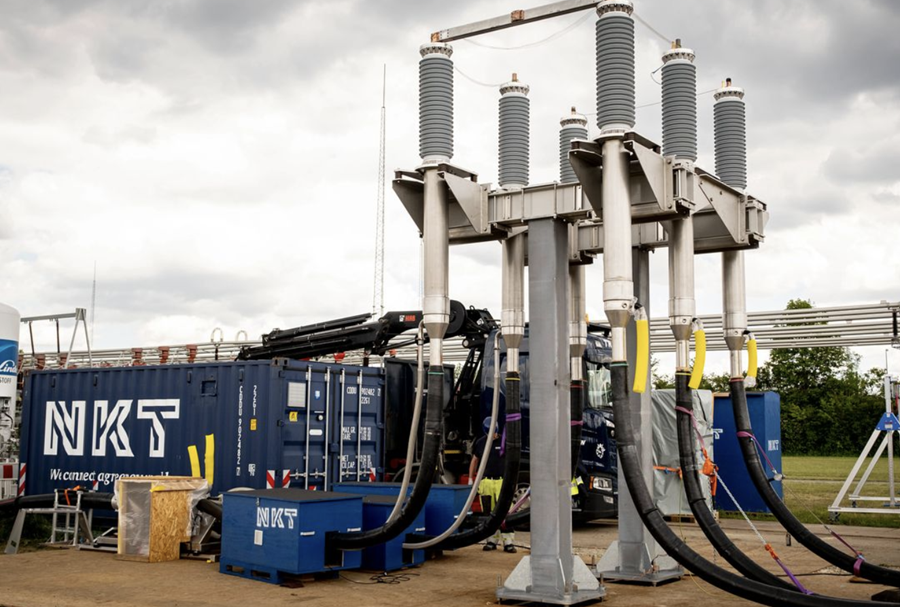
High-Voltage Cables: Why This Sector is Wired for Growth
The booming offshore wind industry is driving a surge in demand for high-voltage (HV) cables, essential for transmitting power from offshore turbines to the mainland grid. This demand outlook is reinforced by grid modernisation, electrification and interconnection projects. The introduction of renewable energy into a grid system has two main effects that stimulate demand for high-voltage cables:
There is often a significant distance between the remote locations where energy is generated and load centers where it is consumed.
Energy supply becomes more volatile.
For example, a windless, overcast day in Spain might coincide with sunny skies in Greece and strong winds in the North Sea. This variability in renewable energy generation highlights the growing importance of interconnected national grids. By sharing electricity across borders, countries can balance supply and demand, ensuring grid stability even when local renewable sources are underperforming. Recognising this need, the EU has set a 15% electricity import/export target for each member state to enhance grid stability and security. This fuels a growing demand for high-voltage cables, the critical infrastructure enabling long-distance power transmission.
Three companies – Nexans, NKT and Prysmian – dominate the market for high-voltage cables in Europe, with an estimated 86% combined share. This oligopolistic structure reflects significant barriers to entry, including 1) The high initial investment required to build factories and acquire specialised vessels for cable laying, 2) The highly specialised nature of high-voltage, particularly >220kV HVDC technologies, poses a significant technological barrier, 3) Transmission System Operators (TSOs) which exhibit strong risk aversion, preferring to work with established operators possessing a substantial track record of successful projects using similar technologies, 4) The industry trend towards framework agreements, where large-scale contracts are awarded to multiple companies, further solidifies the position of incumbents. Therefore, the possibility of new entrants reshaping the industry is small.
The cable manufacturing sector offers greater stability than other parts of the offshore wind supply chain, such as turbine manufacturing, as it is less prone to cost overruns and profit warnings. This is further enhanced by favourable supply-demand dynamics, allowing cable OEMs to secure attractive terms with developers, including provisions for managing input cost inflation.
The need for grid modernisation and renewable energy integration will continue to drive strong demand for HV cables. To secure their future cable needs, transmission system operators (TSOs) are increasingly signing long-term contracts with cable manufacturers. This trend is fueled by capacity shortages and ensures greater stability and predictability in the HV cable market. TSOs are investing heavily in grid upgrades, with regulators like the UK's Ofgem approving significant increases in capital expenditure to support these efforts.
Likewise, German energy network operator E.On has raised its grid capex guidance multiple times, targeting more than 6% CAGR in its regulated asset base. In March 2024, E.ON announced an investment target of €42bn ($46bn) to modernise energy infrastructure between 2024 and 2028, a 30% increase compared with the previous plan for 2023–27.
Similar trends are playing out at Enel across its Italian and Spanish operations. The company announced plans to increase its grid spending by 40% from 2023 to 2026 compared to the prior three years. Overall, the substantial rise in grid investment by European TSOs signals a strong and sustained demand for high-voltage cables, benefiting cable manufacturers.
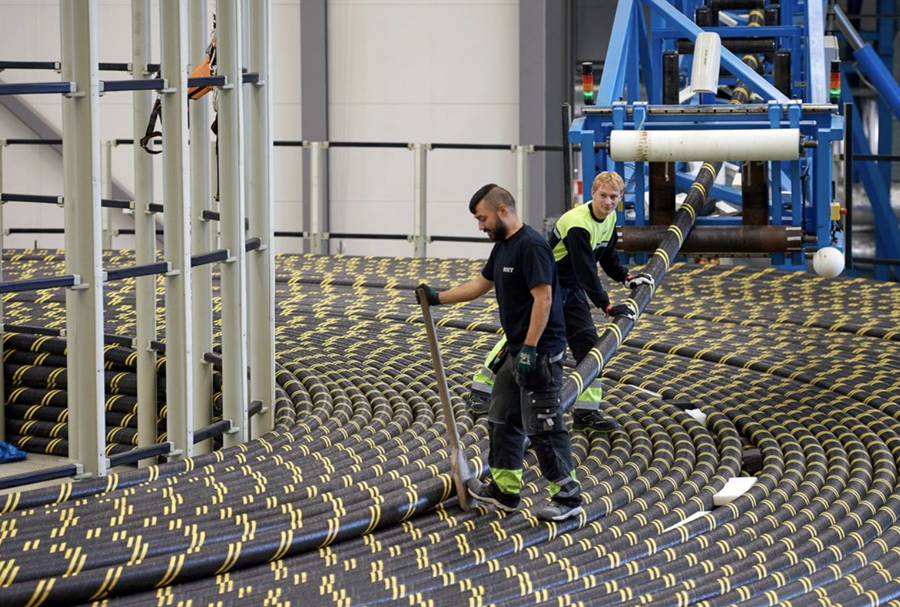
NKT: Capitalising on the Offshore Wind and Grid Expansion Boom
Against this backdrop, NKT presents a compelling investment opportunity. Founded in 1891 and headquartered in Brøndby, Denmark, NKT is a leading high-voltage power cable solutions provider. By selling its photonics business in 2024, NKT completed its transformation into a pure-play power cable company. With a proven track record in high-voltage projects, particularly in Europe, NKT is recognised for its expertise in AC and DC on- and offshore power cable solutions. The company currently holds an estimated 25-30% market share.
With a record order backlog exceeding €11 billion at the end of Q2 2024 and nearly six times its FY2023 revenue, NKT enjoys unparalleled revenue visibility and strong growth prospects. NKT's order book is dominated (80%+) by projects for European Transmission System Operators, offering the stability of a utility in addition to solid growth. These strong growth prospects are supported by over €2.5 billion in capacity reservations and a high-voltage market expected to exceed €10 billion annually through 2030.
To solidify its market leadership and meet surging demand, NKT is investing €1 billion to expand its production capacity. This investment includes the construction of a new high-voltage cable factory in Karlskrona, Sweden. Set to become the world's largest when it commences operations in 2027, this facility will significantly boost NKT's production capabilities. The investment also includes a new cable-laying vessel, further enhancing NKT's ability to serve its growing customer base.
Valuation and Investment Case
While NKT will not add capacity in 2025 and 2026, we expect double-digit revenue and earnings growth over this period. Our optimism is underpinned by:
The supply-demand imbalance where expected annual HV contract awards (EUR 10 billion p.a.) vastly exceed the production capacities of the three major cable OEMs (<EUR 5 billion p.a.). This structural cable shortage puts cable OEMs in a strong position to increase pricing for new project tenders, a trend that has been playing out for projects awarded from 2020 onwards. In addition, this imbalance allows NKT to choose projects with higher margins.
Current earnings partially reflect contracts awarded several years ago with lower margins, while more recent awards have higher margins that will boost future earnings.
NKT benefits from learning curve effects and economies of scale, which improve efficiency and profitability.
Finally, NKT will increasingly move into the installation phase of large projects awarded from 2022 onwards. This phase is more profitable due to the simultaneous recognition of production and installation revenues and the release of provisions as risks decrease during the installation phase.
The significant capital investments announced in 2023 and 2024 will drive a step change in NKT's revenue growth from 2027 onwards as expanded capacity comes online. Furthermore, NKT's 2028 targets appear conservative as they exclude expected earnings from recently announced investments of at least €200 million to expand high-voltage and medium-voltage production facilities.
Against this backdrop of robust revenue growth and margin expansion, we project revenue CAGR of 26% from FY2023 to FY2027E, with even faster earnings growth at 40% CAGR. Our EPS forecasts for FY25E/26E/27E are 1%/34%/52% above consensus estimates. Despite this impressive outlook, NKT trades at an inexpensive valuation of 22.4x/15.5x/10.7x our FY25E/26E/27E EPS estimates, which we believe continues to present a compelling opportunity with its robust growth, limited competition, and a long revenue runway.
As we look ahead, we are confident in the long-term potential of our investment strategy. We appreciate your ongoing support and referrals and we welcome the opportunity to discuss expanding your investment in the fund.
Thank you for your support. Pease feel free reach out to us if you have any questions, we value your thoughts and engagement.