
Q2 2025
Staying Put in a World That's on the Move
Performance
The Caledon Fund's unaudited net return for the second quarter of 2025 was 55.5% and 23.4% for the year-to-date period. Over the same periods, the S&P 500 Index returned 11.0% and 6.2%, respectively. Since inception on 1 January 2024, the Fund has delivered a net cumulative return of 64.7%, or 39.5% on an annualised basis.
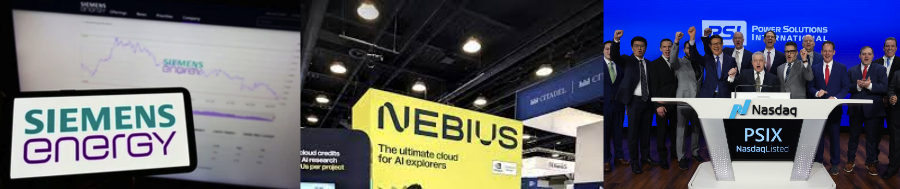
At quarter-end, our three largest positions — Siemens Energy, Nvidia, and Nebius Group — represented 18.9% of the Fund. Siemens Energy (+6.6%), Nebius Group (+5.7%), and Power Solutions International (+5.2%) were the top contributors to Q2 performance. On the other end, Idaho Strategic Resources (-0.3%), Titan Cement (0.0%), and Nextracker (-0.04%) were the largest detractors. We exited Titan and Nextracker during the quarter to reallocate capital toward higher-conviction opportunities.
Our approach is grounded in long-term thinking. Rather than reacting to headlines or short-term sentiment, we seek to own durable, essential businesses that benefit from structural trends — and stick with them through periods of volatility. That discipline served us well this past quarter.
Sustainable value creation takes time. Short-term market fluctuations are unavoidable and difficult to predict, and their impact on individual stock prices is often disconnected from the fundamentals of their underlying businesses. Our focus on companies with enduring advantages that operate in areas of rising demand and constrained supply enables us to take the long view and identify mispriced value beyond the next few quarters. Patience, in our view, is not just a virtue — it is a key driver of outperformance.
Our Approach
We invest where long-term demand meets limited capacity, and where structural barriers protect capable operators and support attractive returns. That often leads us to bottlenecks: critical parts of the energy system or supply chain where scarcity creates pricing power, and well-positioned businesses can earn substantial, sustainable profits over time.
We are selective by design. But when we find:
businesses with physical assets that are difficult to replicate,
operational teams with expertise in complex or regulated environments,
and secular forces driving sustained demand…
…we aim to be long-term owners.
What's changing - and why we're ready
Our results this quarter reflect early signs of a broader shift in global priorities. Companies like Siemens Energy, Power Solutions International, and Argan Inc. — firms that build, power, and enable modern infrastructure — led the recovery. These businesses are quietly doing essential work at the heart of a reordering global economy.
That reordering is underway. After four decades of globalisation, countries are reasserting the importance of local production, energy security, and industrial self-sufficiency. This is not a passing political cycle — it is a structural transformation with long-term consequences.
Several forces are driving this change:
Supply chains are being redesigned. COVID exposed the fragility of global sourcing, accelerating efforts to build resilience through diversification and reshoring. But while U.S. industrial policy is mobilising capital toward domestic manufacturing, China’s widening lead in scale, cost, and technology poses a structural challenge. Without sustained policy support and strategic investment, key U.S. industries risk falling behind, raising long-term implications for competitiveness, employment, and national security.
AI is reshaping power demand. Data centres, once little more than real estate assets, now consume energy on a scale comparable to cities. This benefits firms like Talen Energy, whose nuclear and gas plants are located near major data corridors and can deliver reliable base load power.
Electrification is spreading. From EVs to heat pumps, both homes and industries are shifting to electric. This raises the baseline for power consumption and keeps companies like Argan busy, building the infrastructure needed to support it.
Military and civilian tech are converging. In the past, technologies such as GPS went from military to consumer use. Now the flow of innovation has reversed. Off-the-shelf technologies developed by the automotive and other industries — such as drones, sensors, motors, and batteries — are being adapted for military use. In this context, industrial flexibility and scalable production are national advantages, not just business ones.
We have built the portfolio to benefit from this structural realignment. Our research process — which emphasises demand durability, asset scarcity, and pricing power — continues to surface companies positioned to benefit from multi-year industrial tailwinds.
On Asset-Based Moats
We have long favoured capital-intensive businesses that others tend to overlook. In a market obsessed with "capital-light" models, we often find greater opportunity where infrastructure, regulation, or execution complexity creates real barriers to entry.
A nuclear plant is not built overnight. Nor is a grid interconnect. Businesses that have earned the right to operate in these environments — through technical capability, licensing, and long-term relationships — enjoy advantages that are difficult to copy and slow to erode.
These are the kinds of moats we value: grounded in physical assets, institutional knowledge, and relevance to national priorities.
Looking ahead
We do not claim to forecast markets. But we do believe that owning essential, cash-generative businesses — in sectors the world is once again beginning to prioritise — is a sound way to preserve and compound capital.
As global systems evolve, we draw on lessons from China's rise: industrial depth matters, supply chains win wars, and infrastructure gets built when necessity calls. Many countries are now following that playbook. We are investing accordingly.
We appreciate your trust and long-term perspective. As always, we welcome the chance to discuss your investment — or any interest in adding to it.