
Q2 2024
The Caledon Energy Transition Fund returned a net unaudited return of 0.13% in USD for Q2 2024 and 13.0% year-to-date. Over the same periods, the S&P 500 Index returned 3.9% and 14.5% respectively.
Our investment philosophy is rooted in the long-term. We believe that sustainable growth takes time and encourage our investors to share this perspective. Our strategy, like any investment, is subject to inherent market volatility. Short-term fluctuations in portfolio value, whether monthly, quarterly, or even yearly, are less relevant in the context of our long-term goals.
Portfolio updates
Our largest three holdings at quarter-end were Terawulf (WULF US), Nvidia (NVDA US) and IREN (IREN US). The inclusion of Bitcoin miners in the portfolio may come as a surprise to some investors, so we have dedicated the rest of this newsletter to exploring the potential of select players in this sector. For a concise overview, readers can focus on the sections in bold to grasp the key takeaways.
Data Centers and Bitcoin Miners: Unlikely bedfellows in the AI Revolution
Experienced investors recognise that the greatest rewards often come from opportunities misjudged or overlooked by the market. We believe Bitcoin mining, frequently dismissed and poorly understood, is one such opportunity.
While Bitcoin miners are often associated with the volatile cryptocurrency market, a fundamental shift is happening. The immense energy needs of AI data centers are transforming these miners into crucial infrastructure providers for the AI industry.
The AI Power Paradox: Soaring Demand Meets Rising Energy Consumption
The rise of AI is raising alarms about a potential power crisis as the energy consumption of AI data centers accelerates. For perspective, a single high-performance GPU used for AI training consumes the equivalent electricity of a small household. Moreover, the power demands of these chips are increasing, with Nvidia's latest B200 GPU consuming 2.5 times more power than its 2020 A100 predecessor. Compounding this challenge, the demand for GPUs is surging, with Microsoft, for example reportedly planning to triple its GPU count to 1.8 million by the end of 2024[1]. This confluence of factors underscores the escalating energy needs of the AI industry and the potential strain it may place on power infrastructure.
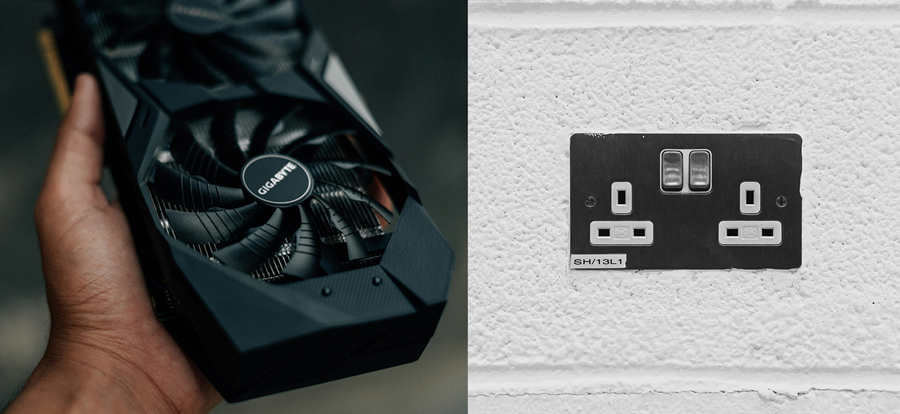
Prominent figures in the tech world have expressed concerns that these escalating energy constraints could stifle AI's progress.
Mark Zuckerberg, Meta's CEO, predicts that energy constraints will precede capital or demand limitations: 'We would probably build out bigger clusters than we currently can if we could get the energy to do it.'[2]
Elon Musk has detailed how access to sufficient electricity will increasingly become a bottleneck for AI development. 'The constraints on AI compute are very predictable... the next shortage will be voltage step-down transformers. You've got to feed the power to these things.'[3]
Even Sam Altman, CEO of OpenAI, has cautioned that achieving adequate power for AI data centers will require a significant energy breakthrough: 'There's no way to get [sufficient power for AI data centres] without an (energy) breakthrough.'[4]
[2] Dwarkesh podcast, 18 April 2024.
[3] Bosch Connected World Conference, 29 February 2024.
[4] StrictlyVC newsletter, January 2023.
Hyperscalers Need for Speed vs. The Slow Pace of Energy Utilities
Tech giants, accustomed to rapid innovation and swift execution, find themselves at odds with the deliberate, often glacial pace of energy infrastructure development. The time-consuming processes of permitting, construction, and grid interconnection, often controlled by utilities, can take years, a stark contrast to the speed at which AI technologies are evolving. This disconnect poses a significant challenge for the future of AI, as the technology's potential may be constrained by the limitations of the energy sector. Hyperscalers, having made substantial investments in GPUs, face a pressing need to deploy these assets quickly. Delays risk obsolescence and represent lost revenue potential, especially in the fast-paced AI landscape.
Bitcoin Miners: A Ready-Made Solution for Hyperscalers' Power Needs
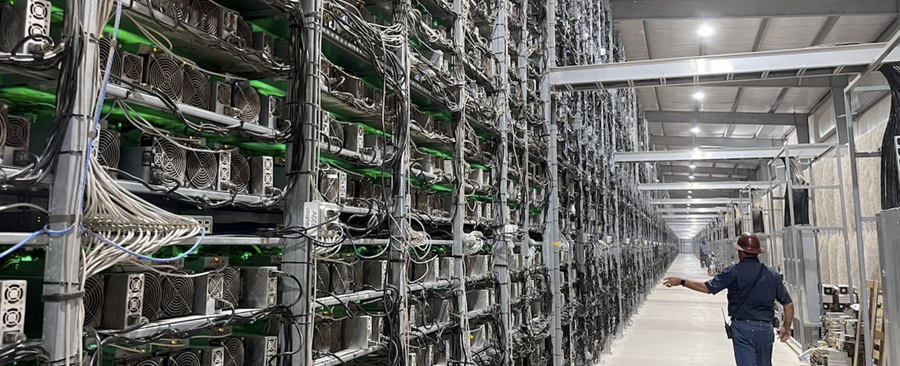
This urgent need for power is pushing tech giants to look for readily available solutions, opening a door for Bitcoin mining facilities that already have the infrastructure. These mining sites are a more attractive option than upgrading older data centers. Older data centers typically have limited power access, and any upgrades would require navigating the time-intensive process of grid access approvals. In contrast, Bitcoin mining facilities are already equipped with the necessary power infrastructure, providing a significant head start to meet the AI industry's growing demands.
More Than Just Power
Beyond their substantial power capabilities, Bitcoin mining sites possess other valuable assets that make them ideal for repurposing for AI/HPC (High-Performance Computing) use. These include:
Water Availability: Essential for cooling the energy-intensive equipment used in both Bitcoin mining and AI.
Land: Ample space for expanding infrastructure to accommodate AI workloads.
Flexibility: Mining equipment can be easily swapped out for GPUs, making the transition to AI relatively seamless.
Low-Cost Energy: Many Bitcoin miners have access to low-cost, often renewable energy sources, which can significantly reduce operating costs for AI data centers.
High Power Density: Bitcoin mining facilities are designed for high power density, a characteristic that is well-suited for AI workloads.
Existing Infrastructure: Many sites already have fiber connections and other infrastructure in place, further simplifying the transition to AI.
"It's as if some Bitcoin miners anticipated the demands of high-performance computing. Their infrastructure is surprisingly well-suited for AI data centers."
This alignment, combined with the limited supply of suitable sites for new AI data centers, has created a unique opportunity for Bitcoin miners to pivot their businesses and capitalise on the growing demand for AI infrastructure.
Limited Supply Amplifies Opportunity
The limited number of Bitcoin mining facilities suitable for AI use, coupled with tech giants' commitments to use low-carbon energy, further amplifies this opportunity:
Amazon aims to reach net-zero carbon emissions across its operations by 2040.
Microsoft has committed to becoming carbon-negative by 2030.
Google aims to achieve net-zero emissions across all its operations and value chain by 2030.
Meta has committed to reaching net-zero emissions across its global value chain by 2030.
Estimates suggest that only 6-7 gigawatts (GW) of suitable bitcoin mining capacity exists, dwarfed by analyst estimates of the projected incremental demand for 35 GW of AI/HPC data centers by 2030. Given this significant supply-demand gap, the ability of certain Bitcoin mining companies to pivot their operations presents a low-competition landscape with the potential for outsized returns.
The Valuation Uplift: A Win-Win for Bitcoin Miners and Investors
Shifting to AI hosting can significantly boost the value of Bitcoin miners. Long-term contracts with tech giants offer stable income, reducing the risks of the volatile Bitcoin mining business and creating substantial value for shareholders. This stability, coupled with the steady cash flows generated by AI hosting, can strengthen their financial position and enhance their long-term prospects.
Zooming out to consider wider grid dynamics, the unique combination of Bitcoin mining and AI/HPC offers a compelling solution for grid load management. Bitcoin mining's flexible energy consumption can complement the steady demand of AI/HPC workloads, allowing data centers to optimize energy usage and contribute to grid stability. This synergy enables operators to take advantage of lower electricity prices to conduct Bitcoin mining during periods of low electricity demand while ensuring consistent power for AI/HPC operations, ultimately fostering a more resilient and efficient energy ecosystem.
The Nvidia Analogy: Don't Miss the Bigger Picture
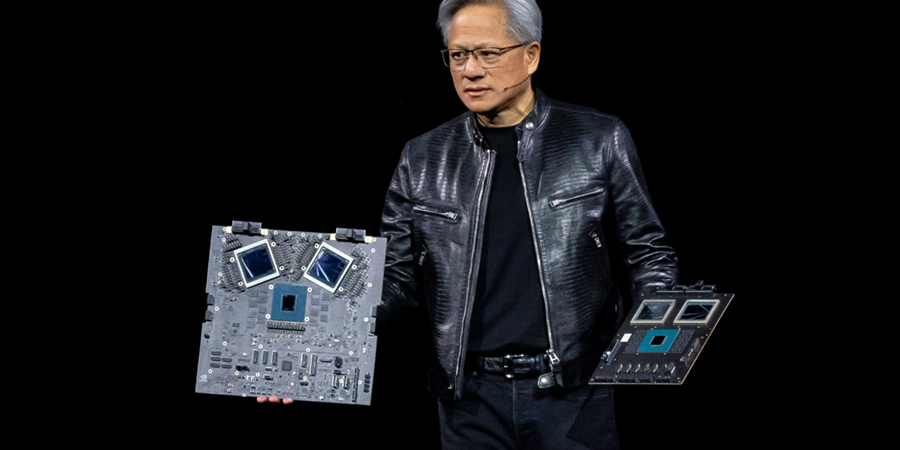
The recent surge in Nvidia's stock price, driven by its AI focus, mirrors the potential investment opportunity in certain Bitcoin mining companies. Many investors initially fixated on Nvidia's gaming division or its connection to cryptocurrency, overlooking the massive growth potential in AI and data centers that would ultimately eclipse gaming and cryptocurrency revenues.
To underscore the point, in August 2022, Nvidia's share price dropped sharply following a significant revenue miss driven by a decline in its gaming segment, which masked the secular growth in Nvidia's AI and data center revenues. Nvidia's stock has since surged 7.6x, highlighting the long-term dominance of these sectors and the market's eventual recognition of this potential.
This narrative offers a compelling parallel to the current valuation of certain Bitcoin miners, historically valued based on their mining operations, thus undervaluing their potential in the rapidly growing AI/data center market. Just as investors initially overlooked Nvidia's AI trajectory, a similar oversight may be occurring with these miners as they strategically pivot towards AI infrastructure provision.
Terawulf and IREN: Capitalising on the Oversupply of Renewable Energy
Three Bitcoin miners, Terawulf, Core Scientific and IREN, pique our interest. Their management teams hail from energy infrastructure backgrounds and have significant insider ownership, aligning their interests with shareholders. They prioritise operational profitability over holding Bitcoin on their balance sheets, setting them apart from most Bitcoin mining companies. Notably, they are actively exploring the AI/HPC business model.
Government incentives have led to a boom in renewable energy, but a lack of infrastructure has created an oversupply in some areas. Bitcoin miners are taking advantage of this surplus energy.
Terawulf's Strategic Positioning
Terawulf is strategically capitalising on the growing demand for HPC infrastructure by repurposing existing resources. Terawulf's Lake Mariner facility, situated at a retired coal power plant in Western New York, leverages the plant's existing infrastructure, including transmission lines, substation, and cooling systems, to power its data centers with hydroelectric energy supplemented by the grid. With ambitious expansion plans to increase capacity by 500 MW, primarily fuelled by hydroelectric power, Terawulf is poised to become a significant player in the HPC market.
Nuclear-Powered Bitcoin Mining: A First for Terawulf
This strategic approach extends to Terawulf's co-ownership (with Talen Energy Corporation) of Nautilus Cryptomine, a pioneering Bitcoin mining facility adjacent to a 2.5 GW nuclear power plant in Pennsylvania. This unique location grants Nautilus direct access to a long-term, zero-carbon power supply at an exceptionally competitive 2 cents per kilowatt-hour. As the first 100% nuclear-powered Bitcoin mine, Nautilus is poised to become one of North America's largest and most efficient mining operations.
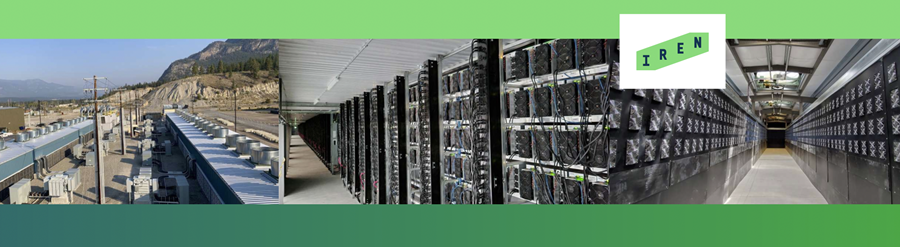
IREN's Renewable Energy Advantage: A Strategic Edge in the Race for HPC Dominance
IREN primarily operates in regions abundant in renewable energy sources, utilising hydroelectric power in British Columbia, Canada and solar power in Texas. The company's Prince George facility is powered entirely by hydroelectric energy, providing a low-cost and sustainable power source for its operations.
"IREN's strategic foresight in securing land and renewable energy resources affords the company a significant advantage over hyperscalers grappling with extended timelines for data center expansion."
By proactively identifying and securing sites with ample power capacity and renewable energy potential, IREN has effectively bypassed the increasingly lengthy grid connection studies and approvals process. This foresight allows IREN to rapidly deploy and scale its data center operations, seizing opportunities in the rapidly expanding market for high-performance computing. At the same time, hyperscalers face potential delays of 5-7 years due to surging demand and grid constraints.
Key Points about IREN's Facilities:
100% Renewable Energy[5]: All IREN facilities are powered by renewable energy, aligning with the growing demand for sustainable computing solutions. This focus on clean energy sources significantly reduces the environmental impact of their operations.
High-Density Compute: IREN's facilities are designed to support high-density compute applications, accommodating rack densities exceeding 70kW compared to the ~15kW typical of traditional data centers. This makes them well-suited for the power-intensive demands of Bitcoin mining, AI, and other HPC workloads.
Global Presence: IREN operates facilities in multiple locations, including British Columbia, Canada (Canal Flats, Mackenzie, Prince George) and Texas, USA (Childress). This geographical diversity allows them to access varied energy sources and cater to a broader range of clients.
Expansion Plans: IREN has ambitious expansion plans underway, including progressive expansion of the Childress data center , which has 100MW in operation, 250MW under construction and a total capacity of 600MW.
Versatility: IREN's facilities are not limited to Bitcoin mining. They are actively exploring opportunities in AI cloud services and other power-dense compute applications, demonstrating their adaptability to the evolving market demands.
[5] Includes use of renewable energy credits.
IREN and Terawulf are actively exploring the potential opportunities presented by repurposing their energy infrastructure assets for high-performance computing. IREN has undertaken a successful pilot project running GPU fleets, generating rapidly growing revenues at highly attractive margins. Terawulf is constructing a 2 MW HPC facility at the Lake Mariner facility, which is due to be completed in early August and is in the final stages of designing a 10 MW HPC facility. The company sees the opportunity to expand its high-performance computing business to 100 MW within the next few years.
Both companies have also disclosed ongoing discussions with various technology companies and major financial institutions as potential end investors.

Valuation
The inherent potential to convert Bitcoin mining facilities into AI/HPC data centers is central to our valuation of IREN and Terawulf. The Coreweave/Core Scientific transaction announced in early June 2024 is the primary data point that informs our analysis in this respect.
The key terms of this transaction are as follows:
Hosting: Core Scientific will deliver approximately 200 megawatts ("MW") of infrastructure to host CoreWeave's high-performance compute ("HPC") operations with operational status expected in H1 2025.
Contract term: An initial 12 years with two five-year extension options.
Revenue: Average annual revenue of $290m.
Utility costs: Power and utility costs are directly passed through to CoreWeave.
Capex: Capex investments associated with site modifications are expected to cost $1bn – 1.6bn to be funded by CoreWeave. An estimated $300 million of this capex spend will be credited against hosting payments at no more than 50% of monthly fees until fully repaid.
Core Scientific management has disclosed that the ongoing total expenses (including allocation of overhead costs) associated with the provision of HPC hosting under this contract amount to $58m per year. Set against an annual revenue of $290m, this implies a profit margin of 80% once Core Scientific has repaid its $300m share of capex required to repurpose the sites.
This contract essentially makes Core Scientific a data center company with extremely attractive profit margins and client lock-in. Core Scientific management has indicated high interest in an additional 300MW available for HPC, and it is confident that this additional capacity will come into operation at the same time as the 200MW contracted by CoreWeave. Furthermore, Core Scientific management has signalled that the terms of the contract with CoreWeave serve as a baseline for similar contracts.
Valuations of listed data center companies such as Equinix and Digital Realty provide a benchmark for comparison. These valuations offer insights into the potential value of IREN and Terawulf if they successfully transition to AI/HPC data centers. As of June 2024, Equinix and Digital Realty traded on an average forward EV/EBITDA multiple of 22.2x. Applying this valuation multiple to Core Scientific's 500MW portfolio earnings on terms similar to the CoreWeave deal, we estimate 256% upside for Core Scientific.
A similar approach - taking a conservative view of the power capacity available for conversion to HPC hosting – indicates potential upside of 150% for IREN and 450% for Terawulf, respectively. We expect further upside to these estimates for several reasons. First, our analysis does not account for the additional power capacity expected to come online over the next two years. Second, we assume there will be no further growth in power capacity beyond the currently announced projects. Finally, a more appropriate valuation metric, such as the EV/EBIT multiple, should be used to capture the full potential of these companies.
In conclusion, Bitcoin miners are not merely players in the volatile cryptocurrency market; they are evolving into critical AI infrastructure providers. Their unique assets and capabilities position them for significant growth and profitability in the years to come. The market will increasingly recognise this, and combined with long-term contracts underpinned by steady cash flows from Tier 1 clients, this will increasingly be reflected in these companies' valuations.
As we look ahead, we are confident in the long-term potential of our investment strategy. We appreciate your ongoing support and referrals and we welcome the opportunity to discuss expanding your investment in the fund.
Thank you for your support. Pease feel free reach out to us if you have any questions, we value your thoughts and engagement.